Skip to content
JivaHealth Physiotherapy

NDIS physiotherapy, wherever you are in South Australia.

Experienced telehealth physiotherapy for people living with neurological and complex conditions — delivered to your home, anywhere in the state.

NDIS plan-managed and self-managed participants welcome.

Coober PedyFlinders RangesCedunaPort LincolnRenmarkMount GambierAdelaide
  • AHPRA registered physiotherapist
  • Master of Physiotherapy
  • 2,000+ clinical sessions in 2025–26
  • Neurological rehabilitation focus
  • NDIS provider
  • NDIS Worker Screening Check

At a glance

Who
NDIS participants living with neurological, musculoskeletal and complex conditions.
What
One-to-one physiotherapy by video: assessment, guided exercise, home programs and written goals.
Where
Anywhere in South Australia, delivered to your home by telehealth.
Funding
Capacity Building – Improved Daily Living, charged within NDIS price limits.
When
Telehealth sessions on Wednesdays, Thursdays and Sundays.

Conditions we work with

Not sure whether your condition fits? Ask. We'll tell you honestly if telehealth physiotherapy can help.

Neurological

Where most of our clinical interest sits, and the work we find most rewarding.

  • Stroke
  • Parkinson's disease
  • Cerebral palsy
  • Acquired and traumatic brain injury
  • Brain tumour rehabilitation
  • Guillain-Barré syndrome
  • Multiple sclerosis
  • Motor neurone disease
  • Huntington's disease
  • Ataxias
  • Transverse myelitis
  • Post-polio syndrome
  • Dystonia
  • Incomplete spinal cord injury

Neuromuscular & developmental

Long-term support that adapts as needs change.

  • Duchenne and other muscular dystrophies
  • Spinal muscular atrophy
  • Charcot-Marie-Tooth and peripheral neuropathies
  • Spina bifida
  • Global developmental delay

Also

Everyday goals that matter just as much.

  • Chronic pain
  • Musculoskeletal pain and injury
  • Falls, balance and mobility
  • Post-operative rehabilitation
  • Functional capacity and daily-living goals

Living with something not listed?

Ask. Most neurological, musculoskeletal and complex conditions respond well to physiotherapy.

Get in touch

How telehealth physiotherapy actually works

Sessions are active — we work through exercises together, not just talk about them. Every program is built around these six things, adapted to what you need.

  • A full assessment, adapted for video

    We guide you through movement and functional tests you can safely do at home, with a support worker or family member helping where needed.

  • We do the exercises together, in the session

    This isn't a consultation where we talk and you listen. We work through your program together on screen — watching your form, correcting it in real time and adjusting as we go, exactly as we would in a clinic.

  • A program you can actually follow

    After every session you receive a personalised program with video demonstrations of each exercise and a printable PDF, so you're never trying to remember what we did.

  • Self-treatment techniques, taught properly

    We'll teach you and the people supporting you how to use self-myofascial release, braces, straps and taping where they help. Techniques you can keep using between sessions.

  • A written plan with clear goals

    Documented goals, timeframes and measurable outcomes — ready for your NDIS plan review.

  • Your support network, included

    Support workers, carers and family are welcome. Often the most valuable thing we do is train the person who's there every day.

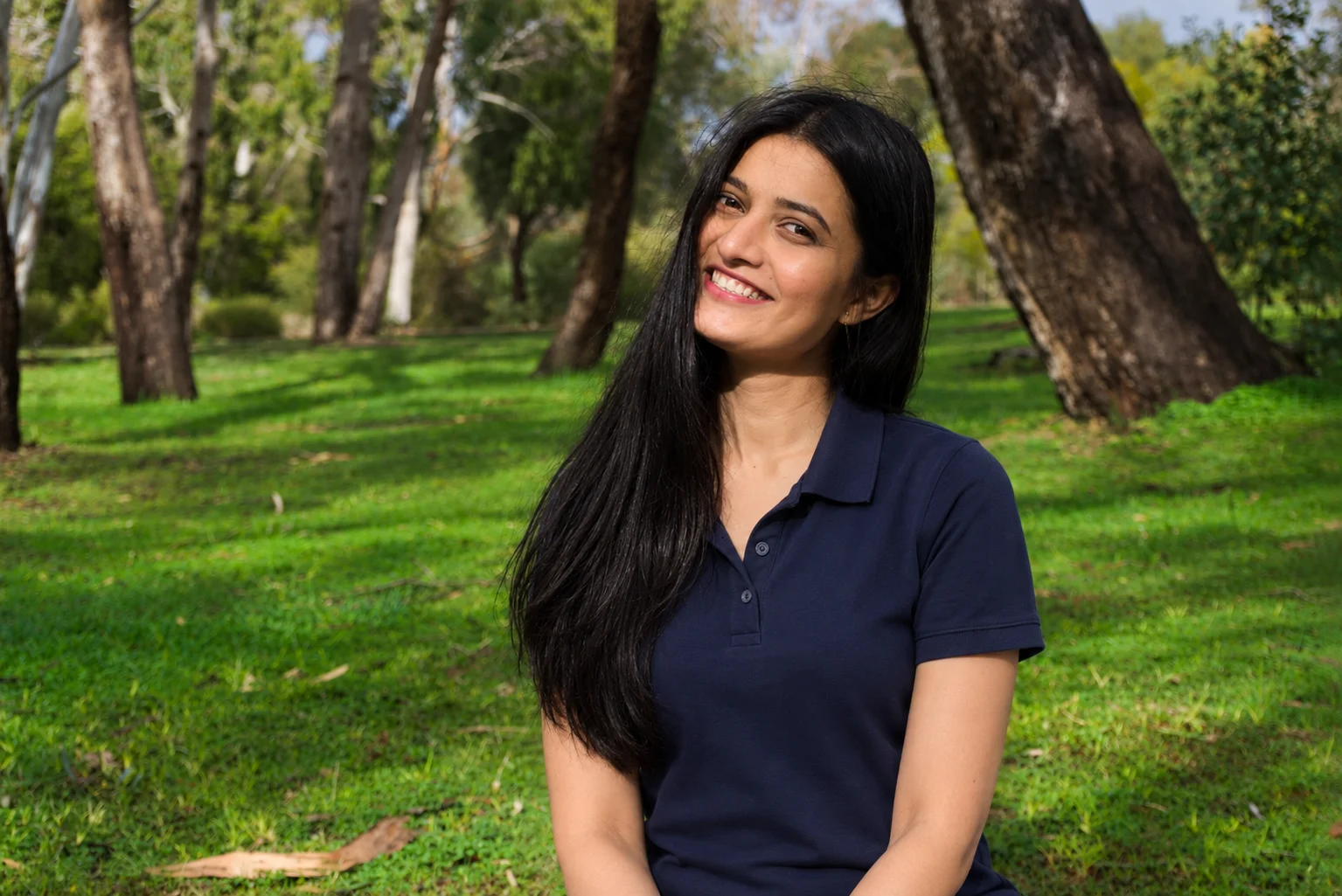
Vidhi Jain, physiotherapist, smiling outdoors among gum trees

Telehealth days

  1. Monday: no telehealth
  2. Tuesday: no telehealth
  3. Wednesday: telehealth
  4. Thursday: telehealth
  5. Friday: no telehealth
  6. Saturday: no telehealth
  7. Sunday: telehealth

About Vidhi

Vidhi is an Adelaide-based physiotherapist, with clinical experience across hospital, private practice, sports and community health settings, including work as a team physiotherapist for soccer clubs.

That range matters for the people she sees now. She has worked with neurological conditions in both hospital and private practice — stroke, cerebral palsy, Guillain-Barré, muscular dystrophy and brain injury — alongside musculoskeletal and chronic pain work. Community health taught her how to reach people without easy access to services, which is most of why she built this one.

Her practice is evidence-based and movement-focused, with a consistent goal: restore movement, reduce pain, and build function that lasts. Trained in neuromuscular dry needling, Vidhi has a detailed working knowledge of myofascial and soft tissue pain — and over telehealth she puts that knowledge directly into her clients' hands, teaching them to use massage balls, foam rollers and other release tools to manage their own pain between sessions. The aim is always independence: people who understand their body well enough to look after it themselves.

Vidhi also brings a different perspective on movement to her physiotherapy. She is a Yoga Alliance qualified yoga teacher and meditation practitioner, and has been a Bharatanatyam dancer for over ten years. Dance and yoga train a practitioner to read a body — how it holds tension, compensates, protects itself — which is exactly the skill telehealth demands, where assessment happens through careful observation. It's also why breathing and relaxation work appear in her programs alongside strength and mobility.

Outside clinical practice, she has led large-scale medical camps, including one assessing and treating over 2,100 children with 40+ health practitioners. That work shaped how she thinks about access: good care shouldn't depend on where you happen to live. She plays badminton at community level, and knows from the other side what it takes to keep training through an injury.

Vidhi works in an Adelaide clinic part of the week and delivers telehealth across South Australia on Wednesdays, Thursdays and Sundays.
Qualifications

  • Bachelor of Physiotherapy (BPTh)
  • Master of Physiotherapy (MPTh)
  • Qualified International Yoga Teacher (Yoga Alliance)
  • Neuromuscular Dry Needling Therapist
  • Meditation Practitioner/Teacher (CTAA)

Is telehealth right for you?

Telehealth suits many people very well, but not everything. We'll tell you honestly when video isn't the right approach, and help you find local in-person support instead.

Works well for

  • Exercise-based rehabilitation for neurological conditions
  • Strength, balance and falls-prevention programs
  • Ongoing management of progressive conditions
  • Training support workers, carers and family
  • People in regional and remote South Australia
  • Anyone who finds travelling to a clinic tiring or difficult

Not suited to

  • Acute, undiagnosed injuries that need hands-on assessment
  • Wound care, including post-surgical wounds
  • Conditions where manual therapy is the main treatment
  • Anyone unsafe to exercise without someone physically present
  • Anything needing urgent medical attention

How to get started

Start with a referral
  1. 1

    Send a referral

    Use the form below or email. It takes about two minutes, and you can refer yourself.

  2. 2

    We confirm suitability and funding

    We check telehealth is right for you, confirm your NDIS funding and send a service agreement.

  3. 3

    Your first session (60 minutes)

    History, functional assessment, goal setting and your first home program.

  4. 4

    Ongoing sessions

    A written program after every session, and progress reports when your plan review comes around.

NDIS funding and what you'll need

NDIS funding

Vidhi works with plan-managed and self-managed NDIS participants.

Physiotherapy is funded under Capacity Building – Improved Daily Living. Sessions are charged within the NDIS Pricing Arrangements and Price Limits, so there's no gap fee when you have therapy funding in your plan.

This service is for NDIS participants only.

What you'll need

  • A phone, tablet or computer with a camera
  • A stable internet connection
  • Space to move safely
  • A sturdy chair
  • Someone nearby if balance is a concern

Not confident with technology? We'll walk you through the setup before your first session. Support workers and family are welcome to help.

Telehealth across South Australia

From Adelaide and the Hills to Port Lincoln, Whyalla, Port Augusta, Mount Gambier, Berri, Ceduna, Coober Pedy, Kingscote and the Flinders Ranges — anywhere with a phone and an internet connection.

  • Adelaide metro
  • Adelaide Hills
  • Barossa
  • Fleurieu Peninsula
  • Murraylands
  • Riverland
  • Limestone Coast
  • Yorke Peninsula
  • Eyre Peninsula
  • Mid North
  • Flinders Ranges & Outback
  • Kangaroo Island

Book a consultation or make a referral

Book a consultation directly, or send a referral and we'll contact you to confirm suitability and funding.

Loading available times…

Prefer a new tab? Open the booking page

Not for emergencies. If you need urgent help, call 000.

Frequently asked questions

Something else on your mind? Email thejivahealth@gmail.com

Does physiotherapy actually work over video?

For neurological and chronic conditions, most of the benefit comes from the right exercises, progressed at the right time and done consistently — and all of that works over video. Research on telerehabilitation after stroke has found outcomes similar to in-person rehabilitation for many people. If you need hands-on treatment, we'll tell you.

Source: Cochrane review: Telerehabilitation services for stroke (2020)

Who can use this service?

Any plan-managed or self-managed NDIS participant in South Australia with therapy funding in their plan. You don't need to be in a particular region — sessions are by video, so anywhere in the state works. This service is for NDIS participants only.

Do I need a GP referral?

No. NDIS participants don't need a GP referral for physiotherapy. You can refer yourself, or a family member, support coordinator or plan manager can refer for you.

How is this funded, and what does it cost?

Physiotherapy is funded under Capacity Building – Improved Daily Living in your NDIS plan. Sessions are charged within the NDIS Pricing Arrangements and Price Limits, so there's no gap fee when you have therapy funding in your plan.

Which parts of South Australia do you cover?

All of South Australia. Because sessions are by video, we see people from metropolitan Adelaide to the Riverland, Limestone Coast, Eyre and Yorke Peninsulas, Kangaroo Island, the Mid North and remote communities.

What do I need for a telehealth session?

A phone, tablet or computer with a camera, a stable internet connection, space to move safely, a sturdy chair, and someone nearby if balance is a concern.

What video platform do you use?

A secure video link that opens in your web browser or on your phone. We'll send it before each session and test it with you before your first appointment.

What if we're not good with technology?

We'll set it up with you before the first session. Most people manage fine with a phone, and support workers and family are welcome to help.

Can a support worker or family member join?

Yes, and we encourage it. Training the people around you multiplies what we achieve between sessions.

What if hands-on treatment is needed?

We'll say so and help arrange local in-person care. Telehealth isn't right for everyone and we won't pretend otherwise.

How often are sessions?

Usually weekly or fortnightly at first, then spaced out as you progress. We decide together.

Do you provide reports for NDIS plan reviews?

Yes. You receive a written plan with goals, timeframes and measurable outcomes, and we provide progress reports when your plan review is coming up.

Can I get started while I'm waiting for my plan or plan review?

Get in touch and we can talk it through. Sessions need to be funded by an active plan, but we can confirm what's needed so you're ready to start as soon as your plan is in place.

Physiotherapy that comes to you

Experienced neurological physiotherapy for NDIS participants, anywhere in South Australia. No travel, no waiting rooms.